Daring in January

**This is a monthly update on Find Your Word.

On an early Sunday morning, I got together with some old and new friends and we headed to Sandy, OR. We got to a shop and took longer than expected to rent our gear, but we still made the bus up the mountain. We were going cross country skiing.

I’ve avoided going to the snow since moving to Portland almost four years ago. Last year some friends wanted to go snowshoeing, and still, I wasn’t ready to gear up and face the cold. But this year when a friend mentioned it again, I decided to listen to my word and be a bit more daring this year. We settled on cross country skiing. We started a group text. And we made plans. We found rental locations and trail options. We agreed that the final decisions would have to be made the day of. And, surprisingly, we made it happen.

We did a four-mile trail, and for the first half mile, I think I fell every time there was even the slightest downhill. It was pretty disappointing. But then, instead of going in the middle of the pack, it was my turn to lead, and something just kind of clicked.

I had been cross country skiing once before, in Michigan. And I assumed, based on that experience, that everything had to be perfectly flat, but that’s not how it is, at least not where we were. There were uphills and downhills and small creeks to cross.

At one point, we happened upon an older woman who I’m pretty sure saw me fall (again). She used to teach cross country skiing. She told me to flex my ankles. To be honest, that’s still semi-meaningless to me, but thinking about it during the downhills really helped. I stopped falling! I learned to lean into the downhill, instead of leaning back out of it and falling. It was kind of a magical lesson in living.

By the end of the trail, our group had split, three ahead and two in the back. I stayed on the mountain alone for a while, waiting for the second group. I was worried and feeling oddly accomplished.

This was exactly what I wanted for 2019: adventure and erring on the side of risk. I could have continued to avoid the snow this year, but I’m glad I didn’t. On this trip, I was reminded of my friend’s amazing ability to be filled with child-like delight by nature. It was a good reminder that almost anything can be delightful if you look at it from the right perspective. It was also a reminder that we can turn to our friends for so many things.

So that’s my January summer of daring and delight. I’m also working on deserving. I started a new job this month. I’m starting to build that life. We’ll see how it goes. I’ll keep you posted!


Verbal Exactitude

Being precise with language is so interesting.

Considering what I’m really trying to say and how to best say it.

Unfortunately, often I’m speaking too fast to be precise. I’m trying to learn to slow down. I think I would enjoy giving myself more time.

Unfortunately, often I use go-to phrases that are harmful, but that I don’t even reconsider. Phrases I may have heard often growing up. Or phrases that I use as shields to protect myself.

When I’m about to share a feeling that I’m still judging myself on, I might say something like “I don’t know what’s wrong with me but…” as an introduction. So someone else doesn’t have to wonder “what’s wrong with her?!” So I don’t have to worry they’ll tell me that something is obviously wrong with me for having the feelings I’m having.

Last week in training I was introduced to a mind-blowing shift in language.

We were urged to ask “what’s happened to them?” instead of “what’s wrong with them?” when working with anyone really.

And my world shifted.

My eyes got watery and my throat ached the way it does when I’m trying to stop myself from crying. It’s a sharp ache, concentrated on a single small point in my throat.

I heard, in a dramatically sudden flash, all the times I’d said out loud or thought to myself “what’s wrong with me?” and it made me so so sad.

It made me sad to realize how deeply I believe there is something wrong with me, and how that belief is supported so easily by the language I use without thinking.

I believe that less now, by the way.

Even less in the last week since this linguistical revelation.

A lot of things have happened to me in my twenty-eight and a half years, some of them wonderful, some of them bad, some sad, some neutral. And they’ve shaped the person I am and the way I behave and the stories I tell myself and the feelings I have. It’s fascinating really to break it down in this way.

I love telling stories, and in telling them I often uncover the stories I’ve been telling myself for months, or years, or for what seems like forever.

I used to tell myself most every day a story about a girl who is broken and abandoned and unlovable and too emotional and much much too needy. That story still comes up, but less often now. It’s a much more complicated story now and I like it that way.

I am emotional and sometimes more needy than other times.

But I don’t think there’s anything wrong with that now.

It’s who I am because of the things that have happened to me.

And that’s ok.


Writing from the Middle

**The first part of this post is copied directly from a small journal I usually carry in my purse.

november 28, 2018 – The hardest thing for me in writing memoir and personal essay is not tying everything up nicely with a pretty bow. It’s so tempting to give the audience what I know they want: a story arc that ends in a win, in redemption, in transformative growth. But if the adage is true that if your ending isn’t happy you haven’t reached the end yet, what do those of us in the dirt and the muck do about telling our story? Is the challenge to find a happy ending in where we are now? Because after all, we all have many story arcs throughout our lives. So can we only tell stories that have ended? Or is the challenge to tell a story that hasn’t ended yet? To strip ourselves bare and show nauseating uncertainty? I’d bet it depends on personality. And for me, the truth lies in the latter. In telling the story not after it’s resolved but in the middle of conflict. When you just don’t know.

~                  ~                 ~

Don’t get me wrong. A story can be retold from many different perspectives. Once from the middle and once from the end. Telling a story sideways (from another person’s perspective) is always fun. But I have found it immensely annoying that most of the stories we read are told after the fact. When we’ve applied our grown-up mind, reached a new level, and made sense of all that’s happened to us.

When you’re in the middle of shit, there is something so invalidating about being shown the end. About being told this is where you might end up. Sometimes you just have to sit in the shit. You don’t want to be pulled out. You’re not ready to. You don’t know where things are gonna take you, and that’s ok.

It’s ok to sit there.

You don’t have to move until you’re ready.

But I’ve tried writing from the midst of a conflict, and I find it nearly impossible. It’s incomprehensible. My brain is off on so many tangents, analyzing so many things, that anything I put down on paper makes no sense.

I can do my best to describe it.

To describe how every morning for the last three days I’ve woken up in a mood. On Friday I just kept crying. And crying I can do. On Saturday I was anxious. My mind was reeling through painful scenarios that may happen and whether or not I’d be able to handle them. And how my different attempts to handle them might go. Today I woke up just plain angry. I think it was the showy kind of anger. The kind that keeps me from realizing that I’m still scared underneath.

I’ve been lucky enough to be able to take it slow some of the days. And on the others I’ve been lucky enough to have early mornings with people who want to know how I’m really feeling. And lucky enough to trust them enough to tell them.

I hate when my moods line up with beautiful weather. I feel like I should be outside, when all I want to do is be inside. It’s work to listen to myself. To let these days “go to waste.” But they’re not going to waste. It’s ok to enjoy blue skies through a window.

It’s ok.

This morning I woke up and was ready to call yesterday a bad day. I woke up anxious and went to sleep anxious. And isn’t that bad? But the truth is, in the middle of those two points, I had a wonderful day. I did enjoy the sun. I did talk to people. And walk around. And I even laughed quite a bit.

It’s tempting to try to minimize days to one emotion or one category. But most days are not like that.

Telling a story from the middle is hard. I’m not even really doing it right now. Though I’m not at the end. I don’t know why I’m waking up moody. I don’t know when I’ll stop. I now understand how hard it is to capture the chaotic middle of things.

Last week I got pie with a friend and I told her my first week of 2019 had been going surprisingly well, but that when I’m on a high note, I’m always aware that it’ll eventually end. Always prepared to let it go.

She asked if I am as quick to remember that when I’m in a dip.

Now I am.

Eleven

**I wrote this piece about nine months ago in an intro to non-fiction writing class. It was the first piece I ever wrote that made me think I might want to be a writer. It is one of my many stories.

You are eleven and you are writing down everything you ate in the last week in the small notebook you got from the LA Weight Loss lady. She is blonde with too-big hair and blue eyeshadow, but she’s not fat and that’s all you aspire to be. You write what you’ve eaten, knowing that afterwards you and your mom will go to Boston Market and get a quarter of a chicken with green beans and new potatoes, and peel the skin off because that’s what LA Weight Loss tells you you should do. You write what you’ve eaten, knowing that after the lady weighs you and your mom in, if you haven’t lost enough weight or if, god forbid, you gained weight she’ll ask you if you had a bowel movement that day or if maybe you’re near that time of the month. You learn not to be too embarrassed or ashamed by these questions because if your bowel hasn’t moved in a few days or you are supposed to start your period soon then the weight gain is not your fault. It doesn’t even cross your mind that the weight gain might be an indicator that the diet outlined by LA Weight Loss doesn’t work. After all you are eleven, and this is only your first diet.

You are eleven and a boy likes you. Or so your friend says. She’s not exactly your friend. She’s actually a friend of a friend who rides to school with you even though you go to Merriam and she goes to McCarthy. But you do get to spend recess together, and that’s when you find out about the boy. It’s not the boy you’re really in love with with the dreamy hair and the nonchalant attitude. It’s his goofy best friend, the clown of the class. He’s literally chinless. He’s kind of like a cartoon. He’s got big teeth and a small bump where there should be a clear separation between his face and his neck. He’s not just skinny, but lanky, like gravity is really doing a number on his limbs. His hair sticks out in all directions mainly because, unlike the other upper-echelon boys in the class, he doesn’t wear a hat. When your friend who is not exactly your friend tells you this boy likes you, you blush and smile privately because you know how you make each other laugh. But that moment barely lasts a single second before it dawns on you that there is no way any boy, let alone a boy in the upper echelon of your class, could like a girl like you, a chubby girl.

You are eleven, and that day you go home and tell your mom that you need to go on a diet. Years later your mom will tell you that her stomach sank when you said those words, that she never wanted you to go down this path. But going on a diet doesn’t only seem essential for the sake of any real possible relationship with this boy, it also seems like a rite of passage into womanhood to eleven year old you. You go to your pediatrician to get her to sign off on your diet, because no respectable diet program would allow an eleven year old to go on a diet…without a doctor’s approval. Your doctor approves as she’s been hounding you to lose weight since she met you six months ago, I mean you are a little high on the BMI scale. You don’t know what that means, but you know that it’s bad, and you know that it’s related to the fact that you’re fat. Your doctor is hopeful that maybe you’ll hit a growth spurt, and everything will even out, but a diet is a good idea anyway.

You are eleven, and you don’t yet know that in fifteen years you will still know the BMI cutoff for “normal” weight even though you’ll try your best to forget it.

You are eleven, and you don’t yet know that the only time you will be “normal” according to BMI will be the summer between your freshman and sophomore year of college. When you’ll religiously eat between 600 and 800 calories a day, workout for thirty minutes every morning, and spend most afternoons reading in bed because you’re just too tired to do anything else.

You are eleven, and this is your very first diet, and you are excited and hopeful because “diet” means “thin” and “thin” means “everything will be ok.”

You are eleven and you don’t yet know that you will continue to try different diets with different rates of success for the next fifteen years. You don’t yet know that 95% of dieters gain the weight back and more. And even if you did, you don’t yet know that it is not the fault of those dieters. That their inability to keep the weight off is not a reflection of their weak character or lack of self-control, but of bodies working overtime to keep them alive. You don’t yet know that dieting is one of the most powerful triggers of eating disorders that we know of today. And that in the fifteen years after your first diet you will present with symptoms of anorexia nervosa, anorexia athletica, binge eating disorder, body dysmorphic disorder, and orthorexia. You don’t yet know how often eating disorders are not diagnosed in fat women, and that, worse yet, eating disorder behaviors are often prescribed to fat women. You don’t yet know that in fifteen years you will consider yourself lucky for having gotten out in your twenties and not in your forties or sixties or never.

What I Read in 2018

I read 85 books in 2018…when I first set out to read a book a week in 2015, I don’t think I imagined I could outdo that. And to be completely honest, I’m not sure I want to. I feel like I’ve gotten to a point where I’m reading more for volume and less for content. I set myself a reading goal for 2019 of 60 books, but it’s hard to think about how many books I want to read in the span of next year when I just want to make sure I’m spending as much time as I need with each book I pick up. So I’m not so attached to that number.

But this post is about looking back, not forward. This post is about the top 9 books I read in 2018. These are the 9 books I read last year to which I gave the highest ratings on Goodreads. You’ll notice I’ll have more to say about some books than others. That doesn’t necessarily speak to their quality as much as when I read them during the year. These are all books I loved and would recommend, regardless of how much I’ve written about each one.

Any Man by Amber Tamblyn. I don’t wanna say too much about this book, because I believe part of my enjoying it was going into it near blind. That being said, I really hope this book is read by both men and women. I believe it would be eye-opening to any reader.

Any Man

The Best Place on Earth by Ayelet Tsabari was definitely my favorite book of the year. It’s a beautiful collection of short stories from the points of view of non-white residents of Israel. Some stories are told from the perspectives of Yemeni Jews. Some from other Mizrahi Jews. One was told from the perspective of a Philippine woman in the country as a caretaker. As someone who spent her childhood in Israel, it was wonderful if a bit painful to see my country from other perspectives. It was wonderful, painful, and very important. I’m still looking for great books from the Palestinian perspective, so if anyone has any recommendations, please do share!

The Best Place on Earth

Educated By Tara Westover is such an interesting book. I really appreciate books that open my eyes to things that I can’t fathom to be happening, and this book does just that. I am almost amazed that I didn’t tear my hair out reading this book, because the things that happened to this woman as a girl were truly infuriating. Her writing, though, is captivating and makes you want to push through that to find out how this girl came to write such a story. A quote that I keep coming back to these last few weeks is: “Genius is no more than childhood recaptured at will, childhood equipped now with man’s physical means to express itself, and with the analytical mind that enables it to bring order into the sum of experience, involuntarily amassed.” by Charles Baudelaire. And this book really does that. This author looks back at her childhood and by making sense of it creates a beautiful piece of writing.
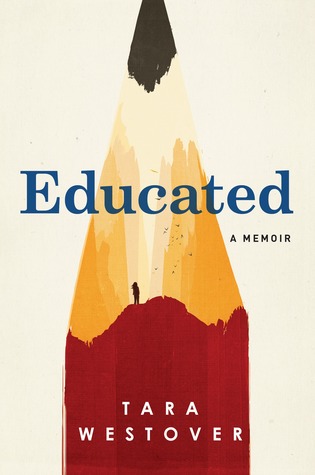
Educated

Exit West by Mohsin Hamid falls into the category of some of my favorite kinds of science fiction/speculative fiction. A regular, beautifully written story about people but with an added twist. It speaks interestingly to the issues of refugees being addressed (or not) all over the world today.
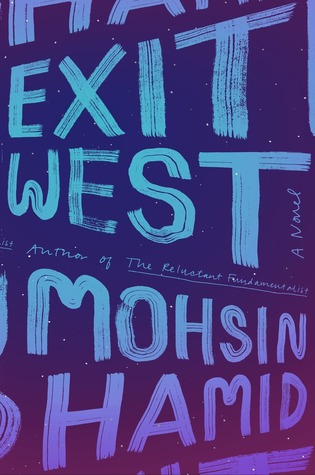
Exit West

Invisible Planets translated by Ken Liu was a book I discovered via Book Riot’s Read Harder Challenge (a challenge I’d recommend to any avid reader). Like any collection of short stories, there are pieces I really loved here and pieces I would have happily gone without reading. But all in all, this was still one of my top reads. There were stories I wish had gone longer. More than anything though, Science Fiction is just interesting to read when written by another culture. It’s a genre that is really painted by the author’s country, it seems. And the essays that came along with these short stories, explaining how science fiction exists in China were enlightening.

Invisible Planets: Contemporary Chinese Science Fiction in Translation

Stay with Me by Ayobami Adebayo was just a moving book about a woman trying to make sense of her marriage and her life. It is sad and moving and fascinating and beautifully set in a place I haven’t had much chance to read about. But what was great about this book was that it was not a story about being from a different place, but rather a story that could be related to anywhere.

Stay with Me

We Are Okay by Nina LaCour was a book I read earlier this year, and I guess I loved it. From what I can remember this book was dripping in emotion in the best way. Also, this cover is just beautiful.
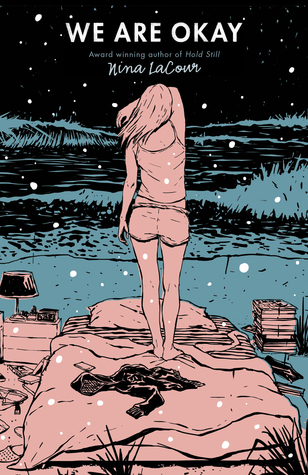
We Are Okay

When Breath Becomes Air by Paul Klanithi was the last book I read this year. Technically I finished it in 2019, but I started it in 2018 and that’s where I’ve left it to reside. This book was not an easy read, but that was due to content, not writing. It was beautifully written. I loved how Dr. Klanithi tried to find the meaning of life and the making of man at the crossroads of neurobiology, philosophy, and literature. And I love his philosophies on life–that it is not only for seeking happiness nor just for avoiding suffering.

When Breath Becomes Air

Woman on the Edge of Time by Marge Piercy was actually a book I read accidentally. I thought it was a different book recommended on Call Your Girlfriend, a podcast I listen to regularly. I still don’t know what book I had been intending to read, but I’m glad this one fell into my lap. It puts forth some really interesting concepts for the future, for different ways our cultures and communities could build themselves. It’s a thought-provoking exercise in what-if.

Woman on the Edge of Time

To My Suspicious Brain

**This was written about a week ago after a tough social gathering.**

I know this isn’t your fault. I know your suspicion is not a conscious decision. I want to accept you and be kind to you and love you because after all, you are a part of me. But the things you make me believe, the stories you tell me, the evidence you seek out, it hurts me deeply.

That you make me believe that my friends don’t love me or even like me is hurtful and harsh. That you focus on the one example of my being left out while ignoring the tens of times I’ve been included is unbalanced.

That you interpret people talking to each other as their not talking to me, while factually true, is anecdotally ludicrous.

But that is what you do, suspicious brain. And it’s not your fault. It’s what you were trained to do. You are the deep-set grooves in that I fall into when I’m not being mindful. I am in a rut, the rut of the stories I heard or thought I heard over and over again.

Dear suspicious brain, I know you think people are inherently not to be trusted or counted on. But I don’t want to think that. I don’t believe that on most levels, but then you pop up and I’m reminded that on some level I do.

Suspicious brain, you seem to be my weirdly uncomfortable comfort zone. I know you well. I have been without you for stretches of my life. But you do seem to come back. Always.

Now I have a name for you. I tell myself: “Oh suspicious brain is acting out. It’s on high alert.” And that does little. But it does remind me that the stories my brain is telling me for that time are heavily biased. Biased towards all my fears.

Suspicious brain, I think you think you’re protecting me. Though for a brain to be thinking thoughts is too meta to be real. I think you don’t think anything. You just go to the routes you know best.

I’m glad at least now I know you’re there. I’m glad at least now, on occasion and online, I can talk about you and let people know what’s happening.

And I’m sad. I’m sad because I understand that you’ll probably always be there. That you may pop up unannounced whenever you see fit. You’re a part of me, and you may never go away, and I’m trying to accept that. It brings me great sadness if I’m honest. To imagine a time that I’m peaceful and feeling loved and connected and accepted, and then you decide to rear your head.

I’m scared you’ll throw me so off-kilter that I’ll throw everything and everyone away. I’m scared.

And I hope. I hope that piece by piece I’ll be able to talk about you. To tell those people who love me and see me and accept me that you’re back and you’re suspicious and that I may need a bit more assurance for a short time. I think that will work.

I hope.

Find Your Word 2019

Happy New Year!

For the last couple of years, I’ve been choosing a word to hold onto throughout the year. A friend first told me about this at the end of 2016. It was something she had done for that year, and she wanted to know if I would like to join her for 2017. After a break up that came as a painful shock to me, even as the instigator, I was ready for something to a little bit more spiritual. Something I hoped that would help bring meaning to the life I was slowly shattering. My word that year was surrender. I wanted to learn to give in. Give in to the pain and the hardships, yes, but also to the joy and the ease. I wanted to reclaim this word that I had always seen as weak. I wanted to make surrender a courageous decision. And I believe that it is.

For 2018, my word was embrace, and it quickly fell out of my life. When I chose it, I had been hoping for a more active word and a lot more hugs in 2018. While I got the latter, I found embrace left a bitter taste in my mouth. 2018 felt like a lot for many of us it seems and embracing it felt like the farthest thing from my truth. I lost touch with my word, but looking back there were important things that I embraced this year. I embraced with fierceness new and strengthening female friendships this year. I clung tightly to my belief that the best relationships are strengthened not weakened by the tough conversations. And I accepted begrudgingly that some of the members of my family, while well-intentioned, loving, and supportive, were not willing or able to partake in the types of relationships I wished to cultivate. Most importantly, without even knowing it was happening, I learned to embrace those things that brought meaning and joy to my life (writing, friendship, storytelling events, and many more) while letting go of those things that did not.

I’ll continue to carry the lessons I learned from past years with me. I’m excited as ever for my word for 2019. I can’t believe this year is already here. I remember going back to college a year after I graduated and seeing a sign welcoming the incoming class of 2017. That year passed by in some kind of a blur. And here we are. 2019.

This year I have chosen three words. A word supported by two others.

Daring

My main word for 2019 is DARING. For me, it is a word that brings to mind Daring Greatly by Brene Brown–a book I intend to reread this year. It brings to mind being willing to fail miserably in pursuit of something great. It’s defined in Merriam-Webster as “venturesomely bold in action or thought.” And that’s what I want to be this year. I want to be bold and adventurous. This word, via Brene Brown’s work, reminds me how much I value being vulnerable both with loved ones and people I’ve just met. And finally, it’s bringing to the forefront my intention to take more risks this year. That doesn’t mean I’m going skydiving this year (probably), but it does mean that I’ll try to err on the side of adventure more than the side of caution this year.

My support words are deserving and delight.

Deserving is a difficult word for me. I don’t always believe I am deserving of the things I want. As a Millenial, often being attacked for being entitled, even when I do feel deserving, I start to question if I should. But I’m taking on a big task this year. After leaving my career as an engineer and returning to school to study psychology, I’m in the process of creating a life that looks the way I want it to look, not the way I’ve always been told it should look. And to do that well, I believe I need this word. A word that means “appropriately having or being given something specified.” I don’t know exactly what my life will look like. I can’t. I don’t want to. But I do have ideas of what I value, what’s important to me. I think remembering this word can help me nurture these knowns while I grow my meaningful life.

Finally, we’re left with delight. I wouldn’t be surprised if my friends described me as a deep and thoughtful person. Maybe even eloquent. And I think often I lose track of pure joy in pursuit of deep discussions and meaningful relationships. And so this year, I’d like to remember to enjoy myself. I want to find laughter as I try new things. While my goal in life isn’t to be happy, I think my life would be made more meaningful by the presence of joy. So delight, “a high degree of gratification or pleasure,” is something I’d like to cultivate. I think it will bring warmth to a year that may be very testing. Also, I have two friends who uniquely use the word delightful and it never fails to put a smile on my face.

With these words in mind, I hope to make 2019 a scary and productive year of experimentation, learning, and joy. I’m hopeful today and plan on enjoying the view from the top for as long as I can before this wave crashes and I’m momentarily drowning again.

P.S. This Find Your Word business is based on Susannah Conway’s work and I highly recommend you look her up if you’re interested!

Oh How We Cope

I used to Facebook stalk on the regular. I’m not talking a light stalk–going a few pictures or posts deep into someone’s profile. I’m talking a deep stalk–going to their first ever posted picture and coming back through time with them. Quickly.

Oh, how time flies.

I really hate the word stalk. It gives a malicious tinge to what I was doing. I associate it with some sort of inevitable follow-up violence. And that’s not what drives my dives into people’s pixelated personas. I seek connection.

I struggle to connect to people sometimes. The reasons are long and complicated and often being worked on in therapy. But put simply: I have a deep belief that people cannot be trusted, and a hard time challenging that belief.

Ironically, connection for me has become more and more about revealing my real, raw often unflattering self to others. And that kind of vulnerability requires trust or at least faith that even if it goes horribly wrong, there will be some recovery.

And so, for some time, when I was in an especially dark place, a place I still struggle to show the people with whom I want to feel connected, I would turn to Facebook. I’d scroll through my feed until I’d happen upon a friend. It was usually a friend I once felt very close to, but haven’t talked to in some while. Often it would be a post revealing some big exciting news like a puppy, a baby, a house, a marriage. And then I’d click. And I’d go back. Back in time to the beginning. I always just went through the pictures. I like the stories I can put together with pictures. Eventually, I’d make it back to the present. Often in tears about a lost connection. And I’d go and find another friend. And do the same thing. Until hours would pass and so would some of the darkness.

This was how I coped with the hard feelings. The feelings of deep loneliness. The fear that I would end up utterly alone. The hurt that no one cares about me. The sadness that something is utterly wrong with me.

But one day, I recognized this coping mechanism was giving me this false sense that I was connected with people. I recognized that Facebook and Instagram were keeping me tied to people I hadn’t talked to in years and had little intention to talking to again. I realized that instead of really connecting with someone during these dark times–instead of reaching out and revealing my darkness, and *fingers crossed* being met with kindness and compassion–I was sitting on my computer for hours.

~                  ~                  ~

A few days ago I was talking to a couple of friends about how we use Facebook, and why we add friends when we do. I don’t really use Facebook anymore. I have an account so I can see events and use messenger, but I rarely log into Facebook itself. I used to add anyone and everyone I met. I used to have Facebook so I could use dating apps. I used to add friends so that my Hinge circle would be bigger.

While we talked, Facebook stalking came up, and we chatted about that for a while. One of my friends said, “I always go back to the start when I stalk.” And I got so excited that I wasn’t alone. I said, “I do that too.” He retracted. He was joking. But I wasn’t. That is what I used to do. I’d do it to myself too. Start from the very beginning. Usually, I’d just do my profile pictures. I don’t have all the time in the world *wink, wink*. I’d go back to this close-up picture of my face. I’m not centered. I’m off to one side. My hair is up, but some flyaways are dramatically moving in the wind. I’m wearing a striped fitted t-shirt I got from old navy. It’s white and light peach and mint green. I’m smiling. There’s movement.

I’m alone. But someone is there, taking the picture. I can’t remember who.

And I think that sums up my brain. My brain always focuses on my aloneness. It never remembers who was there, in the background, making me smile and capturing the moment for me.


It All Gets Better from Here

Happy Solstice! And welcome to my new blog!

I’m excited beyond measure to start one of these again. To share my writing and my thoughts with the world, to live with the imperfections of writing blog posts last minute, and to enjoy tweaking and perfecting those posts I write well in advanced.

Today is the Winter Solstice, the shortest day of the year (in the Northern Hemisphere), and my favorite day of winter. Now, let’s be clear, for those of you who don’t know me very well, I am a summer person. Born in August, a proud Leo, born and raised in or near hot deserts until I turned ten. I have always loved the warmth, the heat, the sun, the summer, the red landscapes of the American Southwest and the Israeli Negev.

But since I’ve chosen to live over and over again away from the desert due to family, career, culture, or friends, I’ve had to find ways to love the winter too. First, it was just enjoying the snow when we first moved to Massachusetts. Then in Pittsburgh, it was enjoying the snow days (4 in a row thanks to Snowpocalypse 2010). Then it was learning to snowboard in Michigan so I had an activity to look forward to every winter. And finally, here in Portland, where the winters are gray but snow is rare, I’ve learned to love the shortest day of the year.

When I first moved to Portland, I was very nervous. I moved here after being diagnosed with moderate depression to be closer to the support of my family. I also suspected that my depression might be more seasonal, and so I was worried that the gray city of Portland might make my condition worse. Still, aside from family, Portland is where I wanted to be. The culture of this city drew me as much as the presence of my family (and free housing) did.

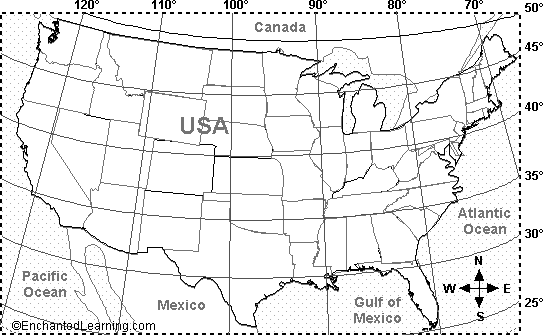
Longitudinally, Portland is the northest (yes I made up a word) place I’ve ever lived (don’t believe me? Confused? Check out the map below). That means I get super late nights in the summer, where the outside is still light at 9PM. But it also means that, along with those clouds, I see more darkness in the winter than light.

USA Latitude and Longitude

Once I survived my first year here, a year that even the locals said was grayer than they were used to, I decided I wanted to find ways to live my best life. My second winter in Portland I made a few deals with myself:

  1. I told myself it was OK to sleep more. Sleeping more and being tired were not necessarily signs that I was more depressed (I was very very paranoid about my depression becoming unmanageable again here), they were just a result of there being less sun. I thought of it as the human version of hibernation (PS none of this is scientifically tested or researched).
  2. I told myself that I didn’t have to go to the snow if I didn’t want to (though the snow did end up coming to me that second year).
  3. I told myself that taking Vitamin D was essential (and my friend told me that the recommended dose may be too low. Check out this article if you’re curious).
  4. And finally, I told myself that I just needed to make it through the shortest day of the year. If I survive the shortest day, it all gets better from there. Each day the sun stays out a little longer.

So here we are. This will be my fourth (I changed that three times in case anyone was wondering) winter in Portland. And after telling some friends of this strategy for surviving these gray winters we decided to celebrate the solstice. So we’re getting together, having food, maybe lighting a fire, and just spending some time in each other’s company. One of the hardest things to me about the winters in Michigan was that it was significantly harder (because it was SO DAMN COLD) to get people together then. So spending time with people is a preventative measure for me.

I hope you’ve all made it this far, and that you all have lovely holiday plans and/or had lovely holidays. And thanks for reading my first post back!

P.S. If you’re a new friend/follower and want to check out my old blog, click this link. And enjoy!